
ON THIS PAGETable of contents15 sectionsShowHide⌄
Sprawling beneath the peaceful, sunlit forests of the Cu Chi district lies one of Vietnam’s most legendary engineering feats: the Cu Chi Tunnels. Located roughly 60 kilometers northwest of Ho Chi Minh City, this vast underground network served as a strategic military stronghold and lifeline for the Viet Cong during the Vietnam War. Today, travelers flock to Cu Chi to walk through history—stepping out of the bustling modern city and into a preserved subterranean world. Visitors can crawl through modified tunnel sections, examine hidden booby traps, watch historical demonstrations, and gain profound insight into human resilience.
What Are the Cu Chi Tunnels?
The Cu Chi Tunnels are a massive, multi-layered underground network spanning over 200 kilometers. Situated in the Cu Chi district just outside Ho Chi Minh City, this subterranean system served as the primary operational base for the Viet Cong during the Vietnam War. Far from being mere passageways, the tunnels were fully functioning underground cities containing living quarters, command centers, hospitals, kitchens, and weapon storage facilities. Today, the site stands as one of Vietnam’s most compelling historical attractions, offering visitors a firsthand look at the tactics, endurance, and ingenious survival strategies used during the conflict.
History of the Cu Chi Tunnels
How Were the Tunnels Built?
Construction began in the late 1940s during the Indochina War, initially as simple hidden trenches and isolated dugouts to store weapons and evade enemy patrols. As military pressure mounted in the 1960s, local fighters expanded these small shelters using basic hand tools—hoes, picks, and wicker baskets. Over decades, these individual dugouts were laboriously connected, creating a complex, multi-tiered labyrinth carved into the dense, clay-rich soil of the region.
How Were the Tunnels Used During the War?
During the Vietnam War, the network transformed into a self-contained, subterranean fortress. It served as:
- Movement and shelter: Allowing soldiers to travel undetected beneath enemy lines and survive heavy aerial bombardments.
- Communication: Serving as a hidden relay network for messages and intelligence across combat zones.
- Storage: Housing ammunition, food reserves, and water supplies safely underground.
- Medical facilities: Functioning as makeshift field hospitals where complex operations were performed by candlelight.
- Living spaces: Accommodating entire combat units with living rooms, sleeping quarters, and smokeless kitchens.
- Military operations: Staging sudden guerilla counter-attacks before soldiers vanished back into concealed trapdoors.
What Happened to the Tunnels After the War?
Following the end of the conflict in 1975, the Vietnamese government preserved key sections of the complex as a national memorial and educational site. Select tunnel stretches were widened and reinforced to accommodate international travelers safely, transforming a former battleground into a powerful symbol of historic endurance and popular travel destination.
Things to See and Do at the Cu Chi Tunnels
Explore the Underground Tunnels
Crawling through the narrow, dim passages is the defining highlight of the visit. Feeling the cool, damp earth on all sides gives you a visceral sense of the claustrophobic conditions guerilla soldiers endured for months at a time.
See Hidden Tunnel Entrances
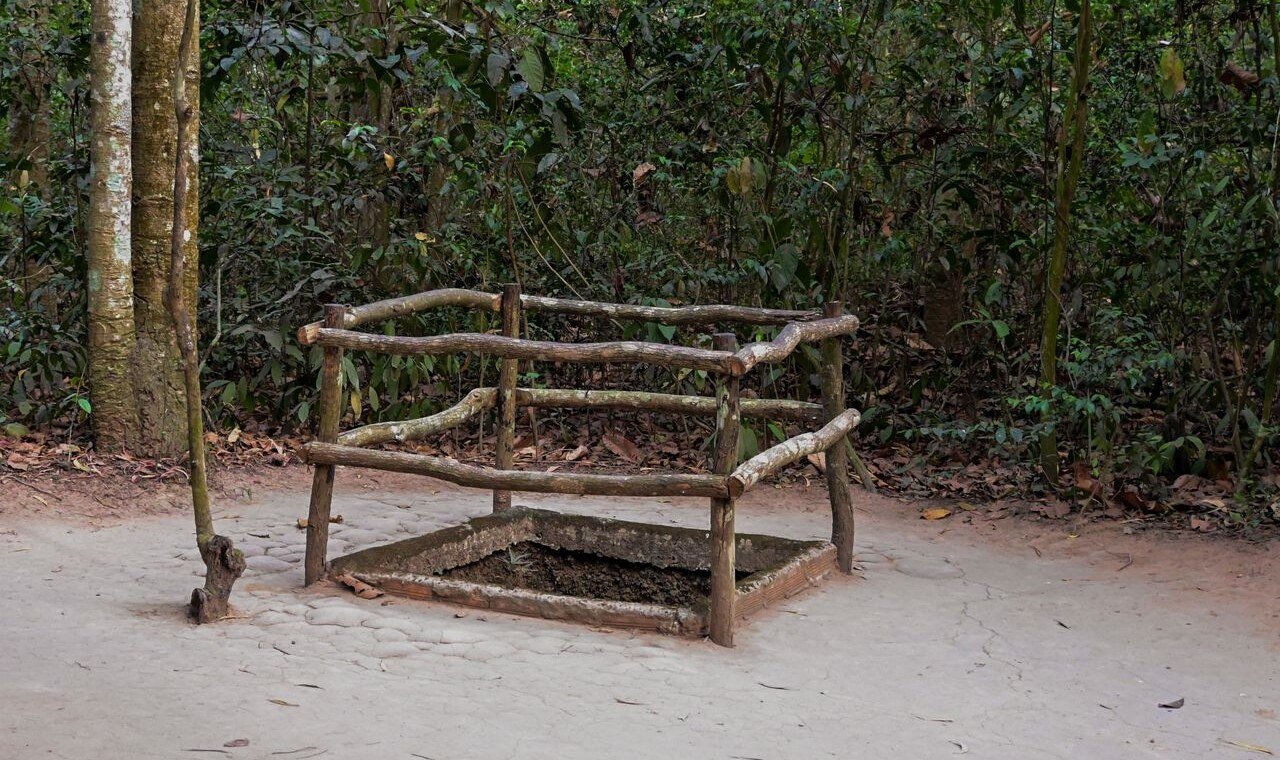
Guides demonstrate how cleverly concealed trapdoors—camouflaged with dry leaves and soil—allowed soldiers to melt seamlessly into the landscape within seconds.
Learn About Underground Life
Walk through reconstructed underground bunkers showcasing rudimentary field hospitals, meeting rooms, command centers, and famous Hoang Ngoc kitchens designed to disperse cooking smoke along the ground to prevent aerial detection.
Watch Historical Demonstrations
Observe how ingenuity turned simple materials into effective defense mechanisms, including bamboo punji stick traps, disguised landmines, and recycled unexploded ordnance.
Visit the Exhibitions
Examine display rooms featuring archived photography, original military gear, interactive maps, and short documentary films explaining the tunnel network’s engineering.
Experience the Surrounding Area
Surrounding the complex is a quiet, leafy forest preserve. Walking along the shaded woodland paths provides a striking contrast between the peaceful scenery today and its dramatic wartime past.
Ben Dinh vs Ben Duoc: Which Cu Chi Tunnel Site Should You Visit?
The Cu Chi complex is split into two distinct tourist locations: Ben Dinh and Ben Duoc. Choosing the right site depends entirely on your travel preferences.
| Feature | Ben Dinh | Ben Duoc |
| Location | Closer to Ho Chi Minh City (~50 km) | Further from Ho Chi Minh City (~70 km) |
| Popularity | High (Primary stop for large tour groups) | Moderate (Mainly independent travelers & locals) |
| Tourist Crowds | Frequently crowded with tour buses | Quieter, spacious, and less crowded |
| Tunnel Experience | Tunnels enlarged specifically for Western tourists | Original tunnel feel; tighter, longer, and more authentic |
| Best For | First-time visitors on quick schedules | Deeper historical experience & off-the-beaten-path travelers |
If you are short on time or booking a standard group day tour, Ben Dinh offers maximum convenience. However, if you prefer an uncrowded atmosphere, wider grounds, and a more authentic feel, Ben Duoc is well worth the extra travel time.
How to Reach the Cu Chi Tunnels
From Ho Chi Minh City by Bus
The budget-friendly route involves catching Public Bus #13 from 23-9 Park near Ben Thanh Market to Cu Chi Station, then transferring to Bus #79 directly to Ben Duoc. It takes around 2.5 hours total.
By Taxi or Private Car
Hiring a private driver or booking a ride via ride-hailing apps offers flexible pick-up directly from your hotel, taking roughly 1.5 to 2 hours depending on city traffic.
By Tour
The simplest option is a half-day or full-day guided bus tour booked through a hotel or agency, which includes round-trip hotel transfers, entry tickets, and an English-speaking guide.
By Boat
Speedboat tours depart from Tan Cang pier along the Saigon River. This offers a scenic 1.5-hour water ride that avoids overland road traffic entirely.
Best Time to Visit the Cu Chi Tunnels
Weather & Seasons
Vietnam’s dry season (November to April) offers the most comfortable conditions with dry paths and lower underground humidity. The rainy season (May to October) brings heavy afternoon downpours that can make outdoor forested trails muddy.
Morning vs. Afternoon
Plan an early morning visit—arriving right when the site opens around 7:00 AM to 8:00 AM. The morning hours allow you to beat the intense midday heat, high humidity, and the arriving convoy of tour buses.
Cu Chi Tunnels Tickets, Opening Hours & Tour Prices
- Entrance Fee: Approximately 110,000 VND to 130,000 VND (~$4.50–$5.50 USD) for international visitors.
- Opening Hours: Daily from 7:00 AM to 5:00 PM (last entry around 4:00 PM).
- Guided Tour Options: Organized group tours from Ho Chi Minh City range between $15 and $25 USD per person including transport and entrance fees.
- Additional Activities: Shooting range experiences (firing vintage rifles) are priced separately per bullet at the site.
(Details last checked: August 2026. Prices and hours are subject to seasonal changes.)
Tips for Visiting the Cu Chi Tunnels
- Wear comfortable clothing: Pick lightweight, breathable fabrics that you don’t mind getting dirty or dusty.
- Choose comfortable footwear: Wear sturdy sneakers or walking shoes; skip sandals or high heels.
- Carry water: Stay well-hydrated throughout the outdoor jungle walk.
- Bring sunscreen & bug spray: Essential for protection against the tropical sun and forest insects.
- Expect narrow spaces: The tunnels are tight; skip underground crawls if you suffer from claustrophobia or severe respiratory issues.
- Be prepared for heat and humidity: Underground sections trap body heat quickly.
- Follow safety instructions: Stay on marked paths and follow your site guide’s advice at all times.
- Don’t rush through the tunnels: Take your time, move slowly, and use emergency exit hatches if you feel uncomfortable.
- Consider visiting early: Arriving at opening time helps you avoid heat and crowds.
- Check accessibility if needed: Outdoor paths are mostly flat dirt roads, but underground crawling is physically demanding.